
 |

 Email Signup
|
Subscribe
|
Login
Email Signup
|
Subscribe
|
Login
For Divers since 1975 The Private, Exclusive Guide for Serious Divers Since 1975 |
"Best of the Web: scuba tips no other source dares to publish" -- Forbes |
Malta Dive Accident Ruled Involuntary HomicideContents of this Issue: Wakatobi Dive Resort, Sulawesi, Indonesia Another Georgia Dive Instructor Guilty Decaying WWII Wrecks Threaten Coral Reefs Divi Flamingo Beach Hotel, Dive Bonaire, N.W.I. Don't Let Bonaire's Easy Diving Fool You Apple Ultra Watch and App: The Future of Dive Management? Don't Hide Your Keys in the Bushes Malta Dive Accident Ruled Involuntary Homicide Anyone Can Get Bent, So Get Insured Avatars' Actors' Amazing Breath Holding Skills Conception Deaths Spark New Owner Liability Law Socorro Aggressor Fails the Test Editorial Office: Ben Davison Publisher and Editor Undercurrent 3020 Bridgeway, Suite 102 Sausalito, CA 94965 CCR and traditional SCUBA do not mix from the January, 2023 issue of Undercurrent
A 60-year-old experienced diver, Arthur Castillo, has been found guilty of the involuntary homicide of his dive buddy, who died during a dive in the Mediterranean country of Malta in January 2020. The victim, 35-year-old Christine Gauci, was a diving instructor, free diver, and a member of Malta's armed forces.
Castillo, a long-time friend of the victim, had planned a dive with her and four other friends. Beforehand, she told him that she had been awake for 20 hours because of work duties. Castillo's girlfriend tried to convince her not to dive, but Gauci said the cold water would revitalize her senses. Two other diving pairs also joined the dive. Not long after going to a depth of 52 feet, Gauci had buoyancy problems, which Castillo helped her resolve. Using hand signals, he asked whether they should call off the dive and surface, but Gauci signaled that she wanted to continue. They descended to around 100 feet when she again had buoyancy problems; Castillo pulled her down and emptied excess air from her BC. In a small underwater cave, one of Gauci's fins became entangled in a fishing net, and Castillo helped cut her free. He said Gauci had again communicated her intention to continue with the dive. On his suggestion, they ascended to around 50 feet, where Gauci had buoyancy problems again. Castillo moved two one-kg. lead weights (4.5 lbs.) from his weight belt onto hers, and Gauci also picked up a heavy rock. Castillo said she communicated that she wanted to continue with the dive. Castillo said that while he had been looking in another direction, Gauci suddenly shot toward the surface, and he couldn't reach her. He saw the rock she had been holding sink past him. Castillo ascended to a decompression stop of 26 feet with the other divers, at which point he could no longer control his buoyancy since he had given weights to Gauci. He conducted an emergency ascent. On the surface, he spotted a person wearing a drysuit similar to Gauci's climbing out of the water. Thinking it was her, he swam in that direction, only to realize that it was another diver. The divers found Gauci face-down in the water near the rocky shore. Her eyes had rolled back in her head, and there was foam in her mouth. Their attempts to inflate her drysuit were unsuccessful, as no air was left in her tanks. At the hearing, a diving equipment specialist had testified that Gauci's twin air tanks had been empty, remarking that this was a "cardinal error" that no diver would make, as they aim to have at least 50 bars (750 psi) of air left at the end of the dive. Gauci's spare [slung] cylinder had been untouched. She had not signaled to Castillo that she needed to share his air, which meant they would have to surface. Nor had she carried out a free ascent while continuously exhaling to avoid barotrauma to her lungs. However, one expert speculated that Gauci might have suffered a cardiac arrhythmia which caused shortness of breath, leading to a quick instinctive ascent to the surface in search of air. The specialist explained that Gauci had been tired before diving and used a defective [borrowed?] drysuit that was too big for her, causing it to trap too much air. She had not been trained to use a drysuit or maintain its buoyancy. In his report, a doctor specializing in hyperbaric medicine also concluded that a combination of fatigue, an ill-fitting drysuit which the victim had not been trained to use, and compressed air "supplied by an unlicensed operator with questionable maintenance on the compressor" were all factors in the fatal accident. Concerning Gauci's dive computer, he noted that "although the diving computer's setting is not overtly dangerous in itself, its setting at its most aggressive setting speaks to the diver's general demeanor toward risk-taking." However, the report also concluded that negligence and omissions were evident from Castillo's side. "The whole scope of the diving buddy system is for the two divers to be close to each other to assist each other in any untoward event during the dive. The assumption that Ms. Gauci was safe on the surface and swimming back to shore, when no such contact and reasoning was made between the two divers, proved to be highly significant as it ensured the omission of a rescue attempt." Magistrate Simone Grech observed that although Castillo had done what was required of him as a dive buddy for most of the dive, he had failed to do so during the final part of the dive. He had assumed that Gauci was swimming to the surface, had only seen her grasping her Nitrox 50 percent decompression cylinder, and had not reestablished eye contact with her. At that late stage in the dive, he had stopped asking her how much air she had left, despite monitoring her high air consumption rate earlier on. The last time Castillo had checked with Gauci, she had 110 bars (1600 psi) left, after which they spent 25 minutes ascending before the final incident. They had not considered that Gauci was using open-circuit scuba while Castillo used a closedcircuit rebreather. Using a rebreather, Castillo "was not in the right frameset of checking on his open circuit buddy; seeing he had no issues with his gas supply, it was not within his procedures during the dive or second nature to his skill set to check his buddy's different and finite air supply." The Court noted that Castillo's claim of being unable to follow Gauci as she ascended because he needed to decompress had been disproven by his decompression computer. "A two-minute deco obligation at five minutes is never an impediment to seeking a lost diving buddy," the report read. The accused had made many assumptions about the dive, said the Court, ruling it to be evident that Gauci had been in difficulty and that Castillo had an obligation to ensure his dive buddy was safe and not simply to assume that she was safe. Magistrate Simone Grech, presiding the Court of Magistrates in Gozo, said she was morally convinced that the accused's failure to carry out a rescue attempt while assuming that Gauci was safe was negligent and had contributed to Gauci's tragic death. The Court said the accused could have easily avoided the tragedy "had he exercised the caution and prudence evidently needed in the circumstances." Although the evidence had established an element of contributory negligence on the victim's part, this did not exonerate the accused of criminal responsibility for what happened, ruled the Court. Castillo was given a two-year prison sentence, suspended for four years, and ordered to pay twothirds of the costs of appointing experts to the inquiry. Divers Question the Outcome of the Case A litany of errors led to the disaster in Gozo (Malta) and the accompanying buddy being prosecuted for negligent manslaughter. This was one of the expert witness's conclusions that the Court gave significant weight: "Use of second-hand, possibly poorly-fitting, drysuit by Ms Gauci, without prior training in its use and buoyancy, is a significant factor towards causality in this incident. "Although the primary and contributing factors are mostly, alas, attributable to the diver herself, the provision of air and unfamiliar equipment, followed by a negligent omission of a rescue attempt and assumption of safety when no assumption could or should have been made, made the final outcome inevitable." There is no mention of the different ascent protocols of open and closed-circuit equipment [The surviving diver, constrained by the use of the rebreather, where a fast ascent can cause a fatal drop in the partial pressure of the oxygen in his breathing mix, followed up more slowly, even though, now short of lead, his ascent rate was faster than he would have liked With a CCR, you can-not simply exhale heavily and make a fast ascent.] The Maltese PDSA Weighs In It is the second case where a diver has been prosecuted in Malta/Gozo after the death of a buddy In that case, the prosecution failed after it was proved the fatality was due to Immersion Pulmonary Edema ( IPE). (Undercurrent September 2015). Malta is only one of a small number of countries where the diving industry must follow legally binding parameters. The Professional Diving Schools Association (PDSA) of Malta represents most of its dive centers. The PDSA stated that the magistrate failed to distinguish between recreational and technical diving parameters. The latter has an emphasis on self-reliance. The Court had not consulted dive training specialists who could have provided a more balanced opinion. In Malta, the investigating magistrate is responsible for appointing two expert witnesses. The PDSA questioned if these witnesses had appropriate knowledge. The PDSA said, "The obvious lack of an expert in diver training and procedures raises serious questions and concerns. A buddy, during any dive, recreational as well as technical, can never be held responsible for the other diver if all safety procedures and protocols are followed correctly. This is no different to any other outdoor pursuits such as jet-skiing, skiing, rock-climbing, or bike adventure." Divers Are Outraged by the Absurd Court Ruling Dr. Daniel Xerri, a Senior Lecturer at the University of Malta and a technical diver, wrote in the Times of Malta: "The increased risks of technical diving are created primarily by extended depth limits, decompression obligations, the use of nitrox and trimix as breathing gases, and the physical exertion of carrying a substantial amount of heavy equipment. Technical divers need to be able to autonomously manage the risks involved without relying on their buddy as a means of staying safe. "By putting more stock in the buddy system than in self-reliance, the Court has not only declared a man guilty of involuntarily causing his friend's death. It has also created a dangerous precedent whereby any diver can be found liable for the death or injury of their buddy if they fail to act in such a manner that to the Court's satisfaction is in line with the duties of a buddy." So are you to be held responsible for the actions of another qualified diver you might be in the water with? After all, both people were certified technical divers. While North Americans rarely dive in Malta, European divers flock there. The main lesson many take from this is to forgo Malta as a dive destination, where they might be found guilty of another's mistakes. |


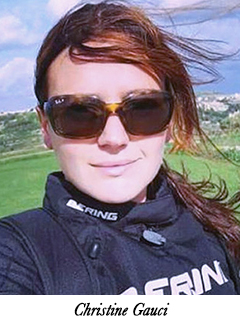 The decision has caused an uproar in the international
dive community. Here are
the details, according to Malta Today.
The decision has caused an uproar in the international
dive community. Here are
the details, according to Malta Today.
I want to get all the stories! Tell me how I can become an Undercurrent Online Member and get online access to all the articles of Undercurrent as well as thousands of first hand reports on dive operations world-wide

| Home | Online Members Area | My Account |
Login
|
Join
|
| Travel Index |
Dive Resort & Liveaboard Reviews
|
Featured Reports
|
Recent
Issues
|
Back Issues
|
|
Dive Gear
Index
|
Health/Safety Index
|
Environment & Misc.
Index
|
Seasonal Planner
|
Blogs
|
Free Articles
|
Book Picks
|
News
|
|
Special Offers
|
RSS
|
FAQ
|
About Us
|
Contact Us
|
Links
|
3020 Bridgeway, Ste 102, Sausalito, Ca 94965
All rights reserved.