
 |

 Email Signup
|
Subscribe
|
Login
Email Signup
|
Subscribe
|
Login
For Divers since 1975 The Private, Exclusive Guide for Serious Divers Since 1975 |
"Best of the Web: scuba tips no other source dares to publish" -- Forbes |
The Depth-rating for Watches is a MythContents of this Issue: NECO Marine, Palau Royal Resort, Micronesia The Depth-rating for Watches is a Myth Stingy Operators, Runny Noses, Credit Card Theft Your Travel Reports Are Important Sargassum Threatens Belize's Beaches A Free Ascent - the Last Resort? Part 1 New Technology to Track Divers Popular Cozumel Dive Guide Struck by Propeller Editorial Office: Ben Davison Publisher and Editor Undercurrent 3020 Bridgeway, Suite 102 Sausalito, CA 94965 from the August, 2025 issue of Undercurrent
Do you still rely on a watch and depth gauge?
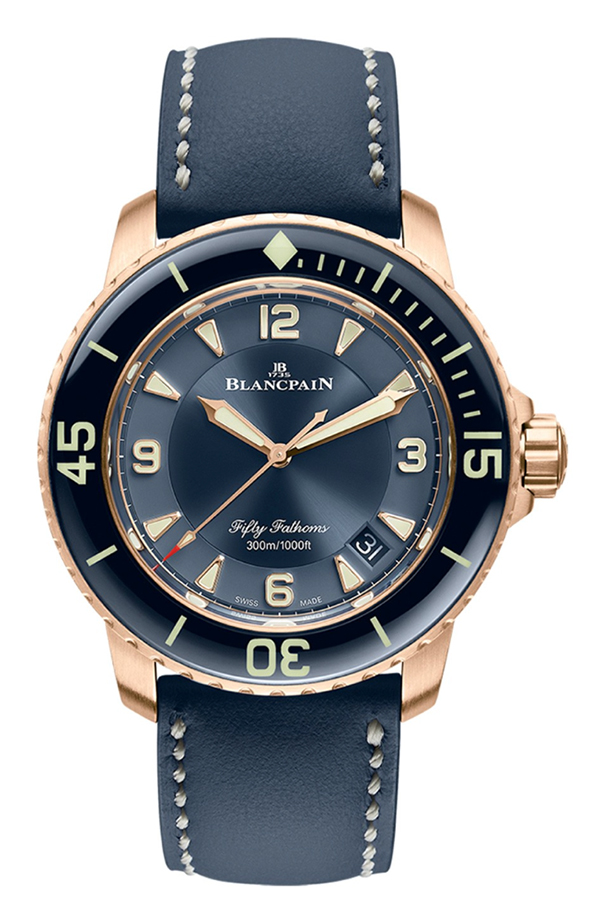
It's a scandal that watch manufacturers are allowed to advertise the depth rating of their timepieces after only subjecting them to a static test, rather than conducting a dynamic test, where the watch actually moves in water. A diver subjects a wristwatch to a lot of movement in the water, and that puts further stress on its seal. In truth, a watch marked water-resistant to 330 feet is probably only suitable for surface swimming, and a diver wearing one marked water-resistant at 660 feet perhaps shouldn't exceed 100 feet. Florida-based author John Fine (The Horse That Won the West is his latest book) has a two-year-old, inexpensive Casio watch rated as water-resistant to 200 meters. Its stainless-steel back is marked as water-resistant to 20 bars (660 feet). It flooded at 30 feet. The manufacturer declined to honor any guarantee, saying there was no warranty for water leakage, and offered only a replacement for $72, which John says is about twice the price of the same watch at Costco. He originally paid $50 for it. (You may note that our Palau travel writer this month also found that his Casio watch flooded before he hit 15 feet.) The Casio is an inexpensive, practical purchase, but not dependable for diving. The expensive "dive" watches, which can run up to six figures, are all about status. They are jewelry and come with a backstory in which the buyers invest themselves. It's a triumph of marketing. Even that can be suspect. One very famous Swiss watch manufacturer, H. Moser & Cie, not long ago made a watch with a Swiss cheese cover to highlight the fraud that many watches bearing the Made in Switzerland stamp actually rely on components sourced from Asia and are minimally assembled in Switzerland. In a world of electronics, expensive watches are gloriously mechanical. But why would you risk ruining something you've paid thousands for by going diving when you can use a watchstyle dive computer that will give you pertinent information about your decompression status for a great deal less money? Diving watches have mostly been relegated to being worn by those who enjoy telling tall tales at a bar, and for whom a depth rating is something only to boast about rather than to actually test by venturing that deep. If you are intent on buying a dive watch, look for the ISO 6425 standard. It should be water-resistant to a minimum depth of 300 feet, have thermal shock resistance, be able to survive in saltwater, and remain readable in total darkness. Among diving watches, the Rolex Submariner stands out as the classic, to the extent that many inexpensive dive watches emulate its design. However, while some dive magazines give away such cheap watches as a premium with a subscription, a Submariner costs between $15,000 and $100,000, depending on whether it's made of steel or gold, and it's depth-rated to 1000 feet. If that's not enough for you, Rolex claims its Sea-Dweller is good twice as deep. That one even has a helium escape valve for releasing the gas when it has been in the helium-rich environment of a saturation diver's dry chamber. Though it's available only in functional stainless steel, you would nevertheless outrank the bragging rights of anyone, with a $21,000 Rolex Sea Dweller Deep Sea on your wrist. The Omega Seamaster (as worn by James Bond) looks similar, has a similar helium escape valve, and a similar price tag. The Blancpain Fifty Fathoms dive watch, often regarded as the first proper dive watch (it wasn't), has been promoted heavily, with an expensively produced book of photographs made during a sponsored trip for icons of the American diving world (including the late Bret Gillam) to French Polynesia. The book, entitled Fifty Fathoms: The Dive and Watch History, is for sale on Amazon for $74. It is also free to those who purchase a Blancpain watch, which run up to as much as $20,000 for the top-of-therange model. (Fifty fathoms is a depth measurement equal to around 300 feet, but the watch promises to handle 1000 feet.) What really was the first watch designed for use by divers? It was the Omega Marine, dating back to 1932. One should note that there has been an epidemic of costly watch thefts on the streets of both London and Paris, so people have been less likely to flaunt their expensive watches in public nowadays, thereby avoiding the trauma. It would also be a shame to get mugged for a cheap lookalike. You might be better off with a $50 Casio watch after all. -- John Bantin |



I want to get all the stories! Tell me how I can become an Undercurrent Online Member and get online access to all the articles of Undercurrent as well as thousands of first hand reports on dive operations world-wide

| Home | Online Members Area | My Account |
Login
|
Join
|
| Travel Index |
Dive Resort & Liveaboard Reviews
|
Featured Reports
|
Recent
Issues
|
Back Issues
|
|
Dive Gear
Index
|
Health/Safety Index
|
Environment & Misc.
Index
|
Seasonal Planner
|
Blogs
|
Free Articles
|
Book Picks
|
News
|
|
Special Offers
|
RSS
|
FAQ
|
About Us
|
Contact Us
|
Links
|
3020 Bridgeway, Ste 102, Sausalito, Ca 94965
All rights reserved.