
 |

 Email Signup
|
Subscribe
|
Login
Email Signup
|
Subscribe
|
Login
For Divers since 1975 The Private, Exclusive Guide for Serious Divers Since 1975 |
"Best of the Web: scuba tips no other source dares to publish" -- Forbes |
Southern Cross Club, Little Cayman IslandContents of this Issue: Southern Cross Club, Little Cayman Island Dolphins with Alzheimer's Disease? Surprising Safety Flaws in Lithium-ion Batteries Truk Lagoon -- Not for the Meek Should Divers with Head Colds be Quarantined? If the Water's Murky, Bull Sharks Thrive Garmin Wants to Save You at Sea A 12-Year-Old's Diving Death Brings a Lawsuit Editorial Office: Ben Davison Publisher and Editor Undercurrent 3020 Bridgeway, Suite 102 Sausalito, CA 94965 diving with REEF from the February, 2026 issue of Undercurrent
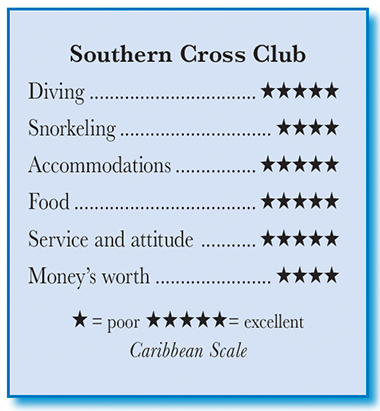
Dear Fellow Diver, This was a REEF trip (yes, we're fish geeks). While I've made 500 dives, to the other travelers, I was a comparative rookie and certainly so when it comes to fish ID. The task of a REEF (Reef Environment & Educational Fund) diver is to tick off the species we see, and our information ultimately is fed into a database to describe the species common to an area and changes in species population. On this one-week trip, I ticked more than 100 species, including my first tobacco fish and first harlequin bass. And a Caribbean reef shark. I was poking around coral heads looking for critters when the shark swam between two coral heads and headed toward me. As it approached below, I dropped slightly and got my camera in place. It kept coming, and I kept shooting as it cruised just below me. A lovely moment with Cayman's apex predator.
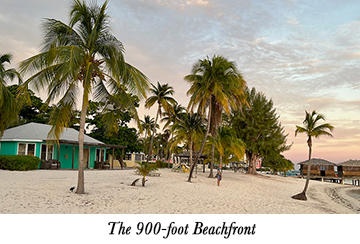
While the Southern Cross Club first opened as a fishing club nearly 70 years ago, it now has 14 attractive beach bungalows, a lovely dining area, a classic outdoor bar, and a 900-foot beachfront. I had a large and comfortable beachfront room, with a king bed, a refrigerator, a walk-in closet, and ample space to work on my camera, charge my lights, and edit images. Though I traveled solo, it would serve two guests very well. I loved the outdoor shower, which made post-dive cleanup easy. My duplex bungalow had a shared porch, a clothesline for drying gear, and an additional porch shower for post-dive rinsing. And, with an Illy coffee maker in my room and a Jura in the dining room, I was happy (fellow coffee snobs understand). This is the old Caribbean: no TV, phone, or WiFi in the room. You come to get away from it all. Even in the main building, WiFi access and speed were pretty poor (but cell service was good). Ah, such a first-world problem. Common areas were open to let breezes come through, and the dining areas had various table sizes and configurations so guests could arrange themselves however. Divers who wanted could give their gear a dunk at the gear shack on the dock and hang it up there. They would have it on the boat the next morning. I took my dryskin, rash guard, booties, mask, and computer back to my room for cleaning and drying.
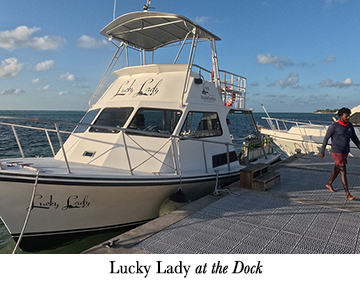
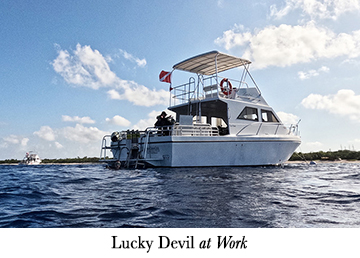
Both 36-foot dive boats, a Newton and a Seahawk, are similarly designed and equipped with safety equipment, below-seat gear storage, dry nooks forward, a marine head, fresh water, a post-dive rinse hose, and separate rinse buckets for masks and cameras. The large camera table was adequate for us, but likely not big enough for multiple large camera rigs. Between dives, we were offered fresh towels, fruit, and snacks. Four of the six days, we were split into two groups of eight, but even with 16 on a boat, I didn't feel crowded. Typically, there were two crew members on the boat; one drove going out while the other guided, and they flipped roles for dive two. They made a point of getting to know us, our kit, and our diving style. Mike suggested making my setup more streamlined by moving my octopus and some clips from the front of my BCD to the lower right. Thanks, Mike! We dived Bloody Bay Wall -- the best of Little Cayman -- every day except for the last, when the winds picked up. Bus Stop was our first dive, after a thorough site briefing (each guide was a good whiteboard artist!). They would go through well-used copies of the Humann/DeLoach guides and mark which species they wanted to talk about. This was to be a 100-foot dive for 60 minutes. I made a giant stride into the calm sea and descended with my buddy to wait for the others. Even in December, the water was 84 degrees, so I didn't need more than a rash guard, although some wore 3 mm wetsuits or vests.
After 30 minutes, Sherry moved us up and over the wall to a sandy bottom with several large coral heads. I puttered around before we headed over to hang out near the down line before our 15-foot safety stop (there's a hookah for anyone low on gas and a tag line at the stern, but with no current we didn't need it).
I enjoyed the 2:00 P.M. dives because few divers attended. That meant long dives and plenty of room. A few local divers attended, including Peter Hillebrand, who has owned the property since 1995 after coming to Southern Cross with his parents in 1981 -- he told great stories. Also diving was Gay Morse, owner of Seahorse Boutique, a coffee shop on the island, who was the long-time dive manager at Pirate's Point, the iconic resort owned by Gladys Howard, which closed in 2023. Gay and I figured out we had dived many of the same Texas sites when she lived there decades ago. We made the last dive of our trip a few days later on the reef named for her. Then, back to the room for a shower, maybe a nap, and a little camera work, then I'd amble down to the bar to schmooze with my fellow divers before the 7:00 P.M. dinner. Most nights, dinners were plated, with the entrée one selected from the menu earlier in the day. With fresh food only delivered weekly by boat, the culinary team did a fine job. We had a mix of continental and Caribbean, fresh fish, steak, and the like, with lamb shanks being my favorite. We had three themed nights: pasta, Mexican/Latin, and Indian. The chefs prepared each entrée to a diner's taste, important on Indian cuisine night as some curries and chutneys packed heat (along with fine flavors). Abhi, one of our guides, said this was Southern Indian cuisine, "the best one." His family is from that part of the subcontinent. Several Indian expats living on the island came to dinner that night. It was nice to dine with a variety of people I might not otherwise encounter.
Early December winds kicked up on our last diving day and kept us on the south side of the island. This meant a little bumpier, albeit shorter, boat ride to our first site, Black Hole, followed by an even shorter one on Gay's Reef, next door. We had the same crew of Sherry and Anna that we started the week with. At Black Hole, we spotted the usual butterflyfish, fairy basslets, blue chromis, and black durgons, eventually dropping to 75 feet, then gradually moved to the shallower sandy bottom and coral heads, where an ocean triggerfish popped up, and then a queen triggerfish. I saw plenty of Nassau groupers, along with an occasional black or tiger, and a yellowfin grouper. After our last dive, at Gay's Reef, a fish discovery led to quite the discussion. Just what kind of flounder were we counting? All of us had seen it, and many had taken photos. We were divided into two camps: Peacock and Maculated. They have similar shapes, are commonly brown and tan, and can tweak their colors for camouflage. But the Maculated is much less common. It would be a cooler find.
Although I began making REEF surveys a couple of years ago, this was my first REEF trip. Being with experienced divers who were not only confident in their skills but also welcoming when sharing knowledge -- and being willing to helpfully challenge your assumptions about fish or diving -- was the best part of the trip. It was a reminder that, above all, scuba is about the people you dive with, share an after-dive beer and stories with, and those you meet along the way that you hope to dive with again. Overall, I thought the reefs were healthy and vibrant, though I respect the perspective of divers who were there "back in the day," or local divers who have been on the island for decades and described how it used to be. What's not encouraging is the arrival of stony coral disease (SCTLD). It's evident in most places, but especially so away from Bloody Bay Wall. Sadly, it's happening most everywhere in the Caribbean.
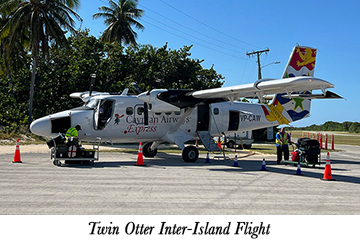
In the Caribbean, the undeveloped Little Cayman has no match. It's lovely and a wonderful contrast to Grand Cayman (but I still enjoy Grand). The year-round population is about 120 people, around seventy of whom are expats, and one is a doctor. You can bicycle for miles, see a few structures, and not people. The Southern Cross Club is a fine hotel, perfect for such a small island. I can't wait to return. - M.L. P.S.: Friends tried to prepare me for the Twin Otter flight "experience." Inter-island flights are so serious about baggage weight that a traveler's bag is often shipped the following day! I had packed both my gear and clothes bags under the 50-pound limit. But at check-in at Georgetown, I was told to drop seven pounds from my carry-on. I explained that doing it would put my checked bags over the limit, but that apparently wasn't a problem. Go figure. So I repacked my bags at the counter, and we weighed again. No go. So I repacked them, and we weighed them again. Third time, it was all good. Fortunately, I was the only customer in line. On the return flight from Little Cayman on the same little plane, I had to do no repacking after packing the way I had originally done. Again, go figure. Our undercover diver's bio: My parents said my love for diving started as a small child when I would ask for "underwater sings" (that frontal "th" sound was complex!) at every opportunity. I began diving more than 30 years ago, with most of it spent working with students in freshwater lakes and quarries, along with trips throughout the Caribbean, Florida, and North Carolina. Many of my friends still don't understand why I swim toward sharks and barracudas.
|

 = publicly available
 The Southern Cross Club folks were prepared to support our work, and, without exception, they were a pleasure to dive with. One of our guides/captains had been there 15 years, and Mike, a Dutch expat and the head of dive operations, had been there 18 years. They picked up my gear from my room on the first day and set it up. They analyzed the nitrox and marked the percentage on the tank -- 32 percent consistently. They were diligent about each of us checking our configuration before leaving the dock and again before hitting the water. After our dives, we left our gear aboard, and the crew rinsed it. Divers who wanted could dunk their gear at the shack on the dock and hang it up there. They would have it
on the boat the next morning. I took a
few things back to my room for cleaning
and drying.
The Southern Cross Club folks were prepared to support our work, and, without exception, they were a pleasure to dive with. One of our guides/captains had been there 15 years, and Mike, a Dutch expat and the head of dive operations, had been there 18 years. They picked up my gear from my room on the first day and set it up. They analyzed the nitrox and marked the percentage on the tank -- 32 percent consistently. They were diligent about each of us checking our configuration before leaving the dock and again before hitting the water. After our dives, we left our gear aboard, and the crew rinsed it. Divers who wanted could dunk their gear at the shack on the dock and hang it up there. They would have it
on the boat the next morning. I took a
few things back to my room for cleaning
and drying.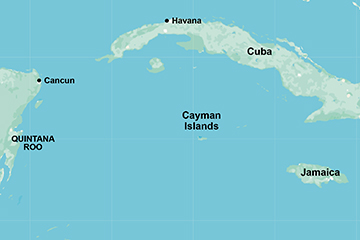 The dining area had hot and cold
beverage stations with good options,
including a coffee maker for regular
coffee, espresso, cappuccino, etc. The property is large, but easily walkable.
The dining area had hot and cold
beverage stations with good options,
including a coffee maker for regular
coffee, espresso, cappuccino, etc. The property is large, but easily walkable.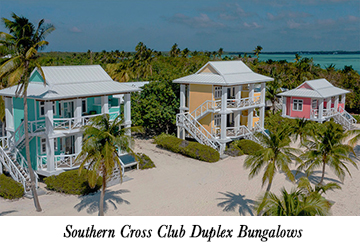 REEF surveyors, like photographers, move slowly to study the nooks and crannies. All the Southern Cross guides got it. Sherry (who grew up on a farm in the Midwest and worked as a fly-fishing guide before she came to the Southern Cross more than a decade ago) led us between coral heads, then we dropped down along the wall, with the blue to our left, where a reef shark moseyed along, looking for brunch. With only six divers, it was easy to keep an eye on each other in case one of us saw something special. The wall's coral and sponges were in good shape (compared with the walls I'd dived in Grand Cayman a few days prior), and visibility was more than 75 feet.
 Our package included two morning dives -- the second was 50 minutes with a shallower restriction. Throughout the dive, our group spread out, and we often stayed a few extra minutes to watch interesting critters; the guides pointed out critters we might otherwise have missed.
 I'd begin the day with a hearty breakfast at 7:00 A.M.: the offerings were eggs cooked to order, waffles, pancakes, French toast, and oatmeal, plus a nice selection of fresh fruit, breads, and juices. Then off to the dock for the 8:00 A.M. departure. The 12:30 lunch buffet included a salad station (prepared to order), an excellent soup, and, during the week, a variety of chicken dishes, grilled fish, burgers, a sandwich bar, and desserts.
 We pored over the reference books on board. We scoured online resources. We discussed, and we debated. Post-dive adult beverages were involved. While most in the two camps stayed firm, I vacillated, ultimately deciding it was a Peacock based on my pictures. But when I looked at the post-trip summary, both types of flounders were listed. Team Maculated gets no argument from me.
 Regardless, I enjoyed every minute of diving and the variety of fish, both in size and species. Sharks and barracuda on most dives, plenty of eels (a sandy bottom filled with garden eels always makes me smile), yellow jawfish bobbing up and down, and too many fairy basslets and blue chromis to count. I saw grunts, and jacks, as well as hamlets, including butter, indigo, and shy. Big old sponges almost always had a treat inside or on the edges. I spent a lot of time looking for smaller fish, like blennies and gobies, watching them cleaning up the larger fish like Nassau groupers. And occasional eagle rays gliding past were a real treat. I recorded saddled, sailfin, spinyhead, and triplefin blennies, and there was no shortage of gobies: bridled, cleaning goldspot, masked, orangesided, and tusked. I also know I didn't capture all the varieties others had, such as peppermint.
 DIVER'S COMPASS: The round-trip Cayman Airfare (GCM to LYB) was under $260 . . . C-cards were checked upon arrival . . . Depending upon the season, the two-dive morning package runs $3,000 to $5,000/person and includes all meals; soft drinks, wine, beer, and cocktails are additional . . . Afternoon dives are an extra US$90 and available if enough divers . . . Rental equipment is available . . . Nitrox is an additional cost per tank . . . night dives are available with enough divers . . . Some guests come for fly fishing and offshore fishing . . . They have paddleboards and bikes, and there are some snorkeling areas nearby, but no beach diving.
I want to get all the stories! Tell me how I can become an Undercurrent Online Member and get online access to all the articles of Undercurrent as well as thousands of first hand reports on dive operations world-wide

| Home | Online Members Area | My Account |
Login
|
Join
|
| Travel Index |
Dive Resort & Liveaboard Reviews
|
Featured Reports
|
Recent
Issues
|
Back Issues
|
|
Dive Gear
Index
|
Health/Safety Index
|
Environment & Misc.
Index
|
Seasonal Planner
|
Blogs
|
Free Articles
|
Book Picks
|
News
|
|
Special Offers
|
RSS
|
FAQ
|
About Us
|
Contact Us
|
Links
|
3020 Bridgeway, Ste 102, Sausalito, Ca 94965
All rights reserved.