
 |

 Email Signup
|
Subscribe
|
Login
Email Signup
|
Subscribe
|
Login
For Divers since 1975 The Private, Exclusive Guide for Serious Divers Since 1975 |
"Best of the Web: scuba tips no other source dares to publish" -- Forbes |
Atlantis Adventurer, Atlantis Puerto Galera, the PhilippinesContents of this Issue: Atlantis Adventurer, Atlantis Puerto Galera, the Philippines Been Diving This Year? Tell Us About It Bora Diving Center, Bora Bora, French Polynesia French Polynesia: It's Closer Than You Think Those Dangerous Errors of Divers Safety Issues Plague Red Sea Liveaboards A SIPE Incident Hits the News Again Free Diving Depth Competitions in the Dock? Editorial Office: Ben Davison Publisher and Editor Undercurrent 3020 Bridgeway, Suite 102 Sausalito, CA 94965 like "Indonesia" but on a budget from the October, 2025 issue of Undercurrent
Dear Fellow Diver,
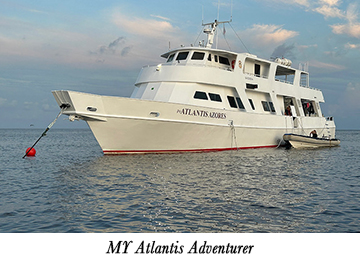
My April trip to the Philippines combined a week on board the Atlantis Azores (it's since been renamed the Atlantis Adventurer, so I'll refer to it as the Adventurer) liveaboard diving in Tubbataha with a week at the Atlantis Puerto Galera dive resort. It was my first dive trip to the Philippines, and I had high expectations -- maybe too high. I had hoped for lush ocean life on the order of Raja Ampat, the Solomons, or Wakatobi; what I found was quite good, but not what I had hoped. Regardless, I am a big believer in appreciating a place for what it is, not what it isn't, and I could see why the Philippines is so popular. With a lot of hunting, I found all the species I might see in Indonesia at Lembeh; some reefs were so lush they would not be out of place at Wakatobi. And the Philippines is a great value. For our first week on board the Adventurer, we embarked and disembarked in Puerto Princesa, a 70-minute flight from Manila. Since our flight arrived well before the boat was ready, the crew dropped us off at a shopping mall. Not in the mood to shop, my buddy and I found a spa, and I arrived at the boat with a supple lower back and tingling feet. Great, inexpensive massages are widely available; I managed to cram six into my two-plus weeks in the Philippines without dinging my wallet too hard. The Atlantis Adventurer, once the Truk Aggressor, is 107 feet long and 16 feet wide. After boarding, we had a clear discussion of safety procedures (e.g., no charging devices in a cabin unless you're there and awake) and assurance that there would be a night watchman. Seven small cabins with double and single bunks and ensuite bathrooms were below decks; the owner's suite (where I stayed with my buddy) on the upper deck had both a double and a single bunk. It was reasonably comfortable but neither spacious nor deluxe.
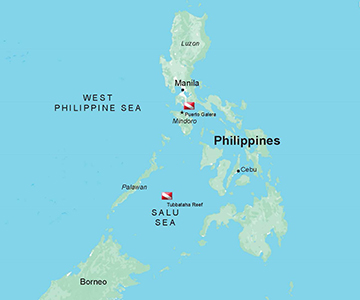
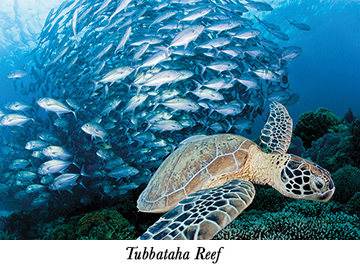
Tubbataha is a special itinerary, only open from March to June, when the seas are least rough. Our route took us around the north and south atolls, with a stop at Jessie Beazley Reef on our last day. Big animals are part of the allure of Tubbataha. I saw at least one or two sharks on most dives, as well as large schools of jacks and barracuda. Dogtooth and yellowfin tuna often appeared, as did turtles. I once glimpsed a manta in the deep and enjoyed two encounters with a small whale shark. Most dives were in medium to strong current, and out of 18 dives, visibility was good on 11 of them. It was not Socorro, but it was pretty great--and I enjoyed anemonefishes, pygmy seahorses, and giant clams (none of which exist at Socorro). While not a beginner's destination, no special experience was required. Like many sites, Deisan Wreck and Staghorn Point (both south of the south atoll) featured steep walls with lovely fields of coral in the shallows. Schools of jacks swirled as giant trevally streaked through, and a couple of gray reef sharks cruised by. A chilly thermocline made me glad for my old but still warm 7mm steamer. The water was mostly 81-82°F, but at times, thermoclines really cooled me down. At Staghorn Point, I watched a school of barracuda near a school of jacks. A Napoleon wrasse lumbered by. Baby whitetips scooted around. But it was the shallows that really delighted me, sparkling with light and color. At Lighthouse Reef, we had our first whale shark encounter. A young creature, it swam by between schools of barracuda and whitetips, gently swinging its tail back and forth. Dogtooth tuna shot by, and I glimpsed a giant marble ray in the deep. I saw the same whale shark on our next dive at Deisan Wreck.
Of course, chefs are the most important people on a liveaboard. Alexis and Glenn varied the meals and posted lunch and dinner menus daily, with options for any dietary preference. The hot breakfast included eggs cooked to order, as well as pancakes, waffles, or French toast, along with sausage or bacon on some days. Lunches began with a soup, such as chicken, vegetable, broccoli cheese, or mushroom, and salads like eggplant, grilled vegetables, or carrot pineapple, leaving me little room for a main course: spaghetti, fried fish, grilled tuna, and rosemary chicken. Somehow, I managed to try almost all the desserts. At dinner, more good soup (my favorite, a roasted pumpkin) and entrées like grilled marlin, turmeric or rosemary chicken, or vegetable curry (with a robust vegetarian option at every meal). Since few night dives were offered -- the boat usually traveled at night -- I enjoyed a complimentary glass of red or white Australian wine. Beer and local rum were also included in the price. My only complaint is about the low quality of the meat, no surprise, I suppose, given the remote location. One day, we visited the ranger station, located just south of the northern atoll. Talk about remote. The station, where I counted 10 resident rangers, perched on stilts above a spectacular reef with no land in sight. They sold T-shirts and handmade turtle ornaments, as well as some dive wear (I found a great pair of whale shark-printed dive pants for $17).
That said, dive groups seem to relish the hotel; while I was there, 30 divers from a Pennsylvania dive shop showed up, as did 24 divers from France. Smaller groups of 4-8 were also common. I can see why it appeals to groups -- for as little as $ 2,000 per week, depending on the season, one gets a room, five dives with a night dive each night, and three meals (running the dining and diving staff ragged). Sadly, there's another reason some divers come here. Some guests, notably a group of men from California, had very young Filipina women with them. The sex trade is active, and indeed, commonly countenanced, but it creeped me out to see a corpulent sixty-something man breakfasting with a girl who looked like an underdressed 15-year-old. I could imagine Jeffrey Epstein and his cronies shopping here.
I had five different guides in one week. My favorite was Obet, who had a real eye for the little stuff. Two of our five guides were diligent about seeking and pointing out critters, and three seemed to phone it in. All were competent but overworked (five dives a day, with lots of gear to carry), and I could imagine they would burn out here. One site I dived twice near San Antonio Island, about a 10-minute boat ride from Atlantis, was particularly fun. Montani was like a Lembeh muck dive (in my log, I wrote Lembeh Lite). Low visibility, current, sandy bottom, junk all around, and a bunch of favorite critters: A. polymnus, the ferocious saddleback anemonefish; dwarf scorpionfish; Emperor shrimp; thorny seahorses; cuttlefish; fingered dragonet; ringed pipefish; pale yellow robust ghost pipefish; a pair of painted frogfish; and finally, a cockatoo waspfish. The resort had a lot of boats, most holding 6-12 divers. The staff carried gear back and forth from the locker room (which has cubbies for each diver) and set it up for each dive, which were usually scheduled at 8:30, 11:00, 2:00, 4:00, and 6:00. The large camera room, although not air-conditioned, had stations for setup and charging. Sites were never more than 15 minutes away. The water was a little warmer than at Tubbataha, 83-84°F or so; visibility was maybe 20 feet with a lot of particulates in the water, making it easy to lose sight of the guide; and sites ranged from muck to small wrecks, reefs, and shallow walls. Like the Atlantis liveaboard, they strictly limited dives to 60 minutes, and I often exited with enough air for a second dive. My buddy and I made three or four dives a day, leaving plenty of time for hotel massages.
Between diving and massages, there was only time left for meals. They provided an ambitious menu that promised more than it delivered. It was tasty, but the low-quality meats dragged it down. As an enthusiastic cook, I know that a dish is only as good as its ingredients, and though they elegantly plated the meals, they couldn't disguise the tough beef and pork. But there was no fault with the fruits and vegetables. I enjoyed the simpler breakfast choices the most.
We took a three-tank day trip to Verde Island, about an hour away by boat. Verde was more pristine than the Puerto Galera area and could be swept by currents. The resort charged a supplement around $50 for the trip (which included a lunch buffet), and it was a nice change of scene. Our first dive, at North Plateau off Verde Island, was the best: We descended into clouds of red-tooth triggerfish (did they chew betel nut?) in high current and drifted over a rock bottom studded with sponges and soft corals. Dogtooth tuna, bigmouth mackerel, jacks, and trevally swooped through the clouds of fish hunting for their next snack. A group of map puffers lolled in the shallower water, where I found fimbriated and snowflake eels. A large green turtle iced this cake. The next dive at an adjacent site had no current but was far duller, as was the final dive at Coral Gardens. But the day's junket was fun and well worth doing. Bottom line: that trip did not inspire me to return, but that had a lot to do with my circumstances. I am older and choose my dive trips selectively. At this point, I only want to dive in great places at my own pace, with long, slow dives and expert guides, preferably on a private boat. Fortunately, I'm able to make that choice. That said, I understand entirely the Philippines' diving popularity. It might be Indonesia-lite, but it is one heck of a good value. -- AEL Our undercover diver's bio: AEL has written for Undercurrent for twenty-plus years and has dived all over the warm-water world.
|


 I floated over fields of stony corals that didn't stop; they were shades of tan and brown with pops of blue and purple, staghorn and table coral. Small colorful anthias darted in and out, as schools of jacks and barracudas cruised above. Twice, dogtooth tuna streaked past, silver bullets amidst the color. It was magical, easily the best dive of my trip, and a reminder of why the Tubbataha reef system is a UNESCO World Heritage Site and a protected area.
 The dive deck seemed crowded, as evidenced by the overflowing three-level camera table. In the bow, the small salon shared the space with the dining tables, so no way the guests could all relax there at the same time, even though there were only 13 of us (some from France and Denmark). So, we used the sun deck, while others read in their cabins. The 15 staff members could not have been more helpful. When we returned from a dive, they always called out "Welcome back!" as they helped us onto the dive deck.
 We dived from rigid-bottom inflatables with backroll entries. After the dive
crew carried our gear on board, we scurried down the ladder and hopped into the
boats. They did the rest. We dived in groups, staying with the guide because
of the currents. They strictly limited our dives to 60 minutes, including the
safety stop, which I found mildly annoying, as I'm a light breather and with
their aluminum 80s, I always returned with 1200-1500 psi. Dives were scheduled
for 7:30, 10:30, 2:30, and 4:30, with tweaks to the schedule as needed. Before
the first morning dive, I nibbled on fruit
and toast from the Continental breakfast
offering, then dug into the hot breakfast
after returning.
We dived from rigid-bottom inflatables with backroll entries. After the dive
crew carried our gear on board, we scurried down the ladder and hopped into the
boats. They did the rest. We dived in groups, staying with the guide because
of the currents. They strictly limited our dives to 60 minutes, including the
safety stop, which I found mildly annoying, as I'm a light breather and with
their aluminum 80s, I always returned with 1200-1500 psi. Dives were scheduled
for 7:30, 10:30, 2:30, and 4:30, with tweaks to the schedule as needed. Before
the first morning dive, I nibbled on fruit
and toast from the Continental breakfast
offering, then dug into the hot breakfast
after returning.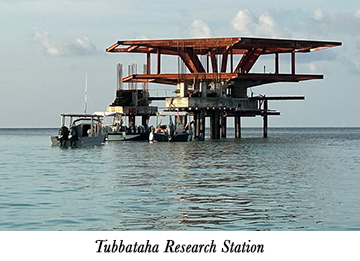 After a smooth trip back and our last night on
board, we flew the next day from Puerto Princesa,
on Palawan, to Manila, where my buddy and I were
met at the airport and taken on a nearly four-hour
van journey through heavy traffic to Puerto Galera
and the funky 40-room Atlantis Puerto Galera Resort
(not to be confused with the Atlantis Dumaguete
Resort). The design is a cross between Antonio
Gaudí and the Flintstones, with woven rattan
ceilings. Our first room, an upgraded terrace room
up four flights of very irregular steps, grossed
me out. There were mold stains on the ceiling,
double beds with exactly one pillow, no lamps to
read --
and it was cramped. We moved to a larger room, aptly named the Flintstone Terrace room, where I heard critter noises in the ceiling. I do love nature, but not nesting above my bed. Little scraps of chewed rattan and bits of chiton intermittently drifted down, attesting to the busy critters above. And the air conditioner would only hold its vent open after taping it. We would have moved again had another room been available.
After a smooth trip back and our last night on
board, we flew the next day from Puerto Princesa,
on Palawan, to Manila, where my buddy and I were
met at the airport and taken on a nearly four-hour
van journey through heavy traffic to Puerto Galera
and the funky 40-room Atlantis Puerto Galera Resort
(not to be confused with the Atlantis Dumaguete
Resort). The design is a cross between Antonio
Gaudí and the Flintstones, with woven rattan
ceilings. Our first room, an upgraded terrace room
up four flights of very irregular steps, grossed
me out. There were mold stains on the ceiling,
double beds with exactly one pillow, no lamps to
read --
and it was cramped. We moved to a larger room, aptly named the Flintstone Terrace room, where I heard critter noises in the ceiling. I do love nature, but not nesting above my bed. Little scraps of chewed rattan and bits of chiton intermittently drifted down, attesting to the busy critters above. And the air conditioner would only hold its vent open after taping it. We would have moved again had another room been available.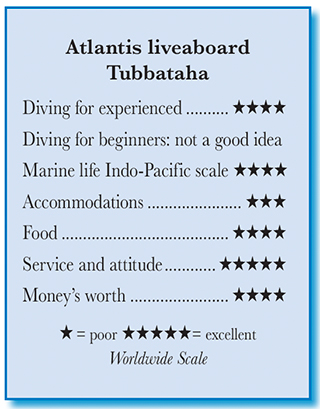 But back to diving. It seemed chaotic before boarding, when DMs were simultaneously briefing every dive group (imagine a cocktail party with 10 different conversation groups). One diver groused that the dive guides were younger and less experienced than ever, and that Atlantis' highly qualified guides had quit and gone elsewhere (she praised the guides at resorts in Anilao, about two-and-a-half hours away).
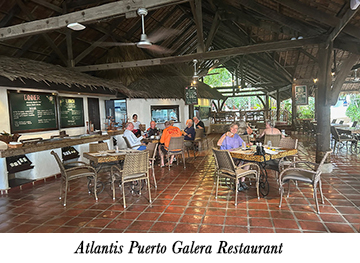 Since the resort is plunked right in the middle of the town, it's easy to
walk around. It was very hot and humid by afternoon, but I saw lots of joggers
and walkers on the waterfront boulevard
early every morning. My buddy needed
some meds for a roiled-up belly, and the
pharmacy was five minutes away on foot.
Several divers at the hotel chose to get
massages at spas in town, where the prices
were lower than at the hotel.
Since the resort is plunked right in the middle of the town, it's easy to
walk around. It was very hot and humid by afternoon, but I saw lots of joggers
and walkers on the waterfront boulevard
early every morning. My buddy needed
some meds for a roiled-up belly, and the
pharmacy was five minutes away on foot.
Several divers at the hotel chose to get
massages at spas in town, where the prices
were lower than at the hotel.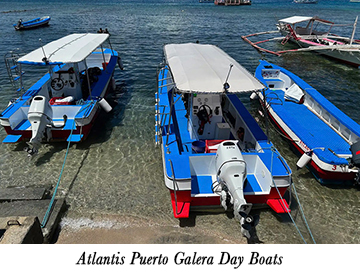 The dive sites in front of the resort, all reached by boat, were junky,
with garbage, mooring blocks, ropes, and lines -- and, as muck divers know,
that's habitat for interesting critters. At Sabang Wrecks, a white ornate ghost
pipefish floated next to a crinoid. A badass spearing mantis shrimp gave me
the stinkeye below clouds of silversides with predatory jacks zipping through.
Nearby, a snowflake eel nicely set off a giant black frogfish. Razorfish floated
in unison, tails up. At Fantasea Reef, smack in the middle of the harbor, I saw
a disco clam and another giant black frogfish. The harbor was good for giant
frogfish -- I saw them at Mini Reef as well. And I often saw beautiful banded
kraits, a particular favorite (I hate land snakes but love sea snakes).
The dive sites in front of the resort, all reached by boat, were junky,
with garbage, mooring blocks, ropes, and lines -- and, as muck divers know,
that's habitat for interesting critters. At Sabang Wrecks, a white ornate ghost
pipefish floated next to a crinoid. A badass spearing mantis shrimp gave me
the stinkeye below clouds of silversides with predatory jacks zipping through.
Nearby, a snowflake eel nicely set off a giant black frogfish. Razorfish floated
in unison, tails up. At Fantasea Reef, smack in the middle of the harbor, I saw
a disco clam and another giant black frogfish. The harbor was good for giant
frogfish -- I saw them at Mini Reef as well. And I often saw beautiful banded
kraits, a particular favorite (I hate land snakes but love sea snakes). DIVER'S COMPASS: I flew to Manila through San Francisco on United, a direct flight; Philippine Airlines flies directly from JFK and LAX. Cathay, ANA, Qatar, Emirates, etc., also fly from their respective hubs . . . Most divers stayed at the Belmont Hotel near Manila Airport before meeting the Atlantis representatives; I also stayed at The Peninsula Manila after the trip for a bit more luxury. . . My 17-day trip with Atlantis came to $ 8,284, including flights to and from Puerto Princesa, land transfers, park fees, and Nitrox. The Adventurer runs about $4500 for Tubbahata trips, and Atlantis Puerto Galera, depending on the season, might be found as low as $2000/week, food and diving included . . . The Adventurer offers rental equipment, but reserve it in advance. They do not repair gear, but they will loan you gear if needed . . . Atlantis Puerto Galera has plenty of rental gear, makes no repairs, but offers loaners. They had 63s and 100s for a small fee . . .
I want to get all the stories! Tell me how I can become an Undercurrent Online Member and get online access to all the articles of Undercurrent as well as thousands of first hand reports on dive operations world-wide

| Home | Online Members Area | My Account |
Login
|
Join
|
| Travel Index |
Dive Resort & Liveaboard Reviews
|
Featured Reports
|
Recent
Issues
|
Back Issues
|
|
Dive Gear
Index
|
Health/Safety Index
|
Environment & Misc.
Index
|
Seasonal Planner
|
Blogs
|
Free Articles
|
Book Picks
|
News
|
|
Special Offers
|
RSS
|
FAQ
|
About Us
|
Contact Us
|
Links
|
3020 Bridgeway, Ste 102, Sausalito, Ca 94965
All rights reserved.