
 |

 Email Signup
|
Subscribe
|
Login
Email Signup
|
Subscribe
|
Login
For Divers since 1975 The Private, Exclusive Guide for Serious Divers Since 1975 |
"Best of the Web: scuba tips no other source dares to publish" -- Forbes |
Your Guide to Diving Chile
|
||||||||||||||||||||||||||||||||||||||||||||||||||||||||||||||||||||
|
Attention!
You must be an Undercurrent Online Member to view the complete members-only reports and articles. Some articles that can be fully accessed by the public have a  button.. button.. 
|
Latest Reader Reports from Chilefrom the serious divers who read UndercurrentAll Reader Reports from Chile |
All 10,000+ Reports |
|
ORCA dive center Report
in Chile/Easter Island
"COME FOR THE MOAI, STAY FOR THE DIVING" filed Aug 20, 2025 by Ken Kurtis (Experience: Over 1000 dives, 23 reports, Sr. Contributor  ) )
|
 |
|
The short version is that Easter Island (more correctly Rapa Nui), best known for the moai statues, has interesting diving too. For a v... ... Read more
|
|
|
Germain at Marenostrum Expeditions/Oceania ship Marina] Report
in Chile/Juan Fernandez archipelago
filed Feb 4, 2013 by linda nelson (Experience: Over 1000 dives, 2 reports) |
 |
|
We hadn't found anything on the web before we left home, except that the fish were unusual and we assumed there was no dive business on... ... Read more |
|
|
ORCA dive center/Manavai Hotel Report
in Chile/Easter Island
filed Jan 18, 2011 by Larry Schnabel (Experience: 501-1000 dives, 15 reports, Contributor  ) )
|
 |
|
Easter Island is about 1/2 way between Chile and Tahiti. The island is unspoiled. Diving, looking at stone statues and other remains of... ... Read more |
|

| See Instant Reader Reports On All Destinations
Subscribers Can Submit a Reader Report Here |
|
Complete Articles Available to Undercurrent Online
Members; Some Publicly Available as Indicated
|
||||||
|
| |||||
Chile Sections from Our Travelin' Diver's ChapbooksReader Reports filed for that year |
Land Based Dive Resorts in Chile | |||||||
For Members Only | |||||||
| 2026 | |||||||
For Public | |||||||
| 2014 | 2012 | 2008 | 2007 | 2006 | |||
Editor's Book Picks for Scuba Diving Chile
including Easter Island
The books below are my favorites about diving in this part of the world All books are available at a significant discount from Amazon.com; just follow the links. -- BD
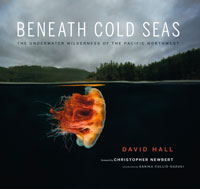 Beneath Cold Seas: The Underwater Wilderness of the Pacific Northwest
by David Hall
It's hard enough to take a first-rate photo of reef life in the best of conditions. Try doing it in murky, bone-numbingly cold water while wearing a dry suit with 40-plus pounds of weights around your waist, and thick, insulating gloves that make it hard to use the camera controls. That's what David Hall had to endure while photographing in Canadian waters, but those physical disadvantages make Beneath Cold Seas all the more amazing.
Hall's book successfully disputes the belief that cold-water reefs are drab and dismal. He has regularly photographed the world's most beautiful dive spots for major magazines from National Geographic to Time. While Hall's shots are taken entirely at Browning Passage in British Columbia, the reef life he shoots resides along the Pacific Coast, from Northern California up to Alaska, and they are as diverse and spectacular as any creature in Raja Ampat or Fiji.
Click here to buy it at Amazon via our website -- our profits go to save the reefs.
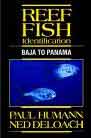 Reef Fish Identification: Baja to Panama
by Paul Humann and Ned Deloach
The latest edition in the popular Paul Humann series of marine life books. The most comprehensive field guide ever compiled for identifying reef fishes from the Gulf of California to the Pacific coast of Panama, including offshore islands. More than 500 photographs of 400 species taken in their natural habitat. The book is dedicated to Baja Legend Alex Kerstitch and includes several of his drawings and photographs. The concise text accompanying each species portrait includes the fish’s common, scientific and family names, size range, description, visually distinctive features, preferred habitat, typical behavior, depth range, and geographical distribution.
Click here to buy it at Amazon.
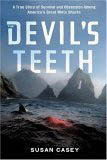 The Devil's Teeth: a true story of Obsession and Survival among America's Great White Sharks:
by Susan Casey
Perhaps the greatest gathering of great white sharks in the world is at the Farallon islands, 26 miles from San Francisco. Researchers have tracked and studied them for years and at least one diver still collects sea urchins in the midst of their gatherings. Journalist Susan Casey lived on these barren islands to write a fascinating, awe-struck account of the sharks, their amazing behavior, their killing strategies, their long distance travels, and life with the researchers. Click on this Undercurrent link to purchase the 304-page, hardbound, The Devil's Teeth at Amazon.com's best price, and all our proceeds will go to coral reef conservation.
 An
American Underwater Odyssey: 50 Dives in 50 States
An
American Underwater Odyssey: 50 Dives in 50 States
: by
Charles Ballinger.
Underwater Odyssey is the story of a scuba diving safari to every state in America. Tired of touring coral reefs, the author embarks on a year-long quest to discover the incredible assortment of adventure diving found in our nation's backyard. His dogged determination to follow his dreams and explore everything from flooded missile sites to abandoned mines should be an inspiration for any diver. Underwater Odyssey transcends the limits of a dive guide to reveal the broader adventure that diving provides.
Click here to buy it at Amazon.
 There's a Cockroach in My Regulator
by Undercurrent
The Best of Undercurrent: Bizarre and Brilliant True Diving Tales from Thirty Years of Undercurrent.
Shipping now is our brand new, 240-page book filled with the best of the unusual, the entertaining, and the jaw dropping stories Undercurrent has published. They’re true, often unbelievable, and always fascinating. We’re offering it to you now for the special price of just $14.95.
Click here to order.
You might find some other books of interest in our Editor's Book Picks section.
| Home | Online Members Area | My Account |
Login
|
Join
|
| Travel Index |
Dive Resort & Liveaboard Reviews
|
Featured Reports
|
Recent
Issues
|
Back Issues
|
|
Dive Gear
Index
|
Health/Safety Index
|
Environment & Misc.
Index
|
Seasonal Planner
|
Blogs
|
Free Articles
|
Book Picks
|
News
|
|
Special Offers
|
RSS
|
FAQ
|
About Us
|
Contact Us
|
Links
|
3020 Bridgeway, Ste 102, Sausalito, Ca 94965
All rights reserved.